Autistic masking: what it is and how the CAT-Q measures it
4 min read New
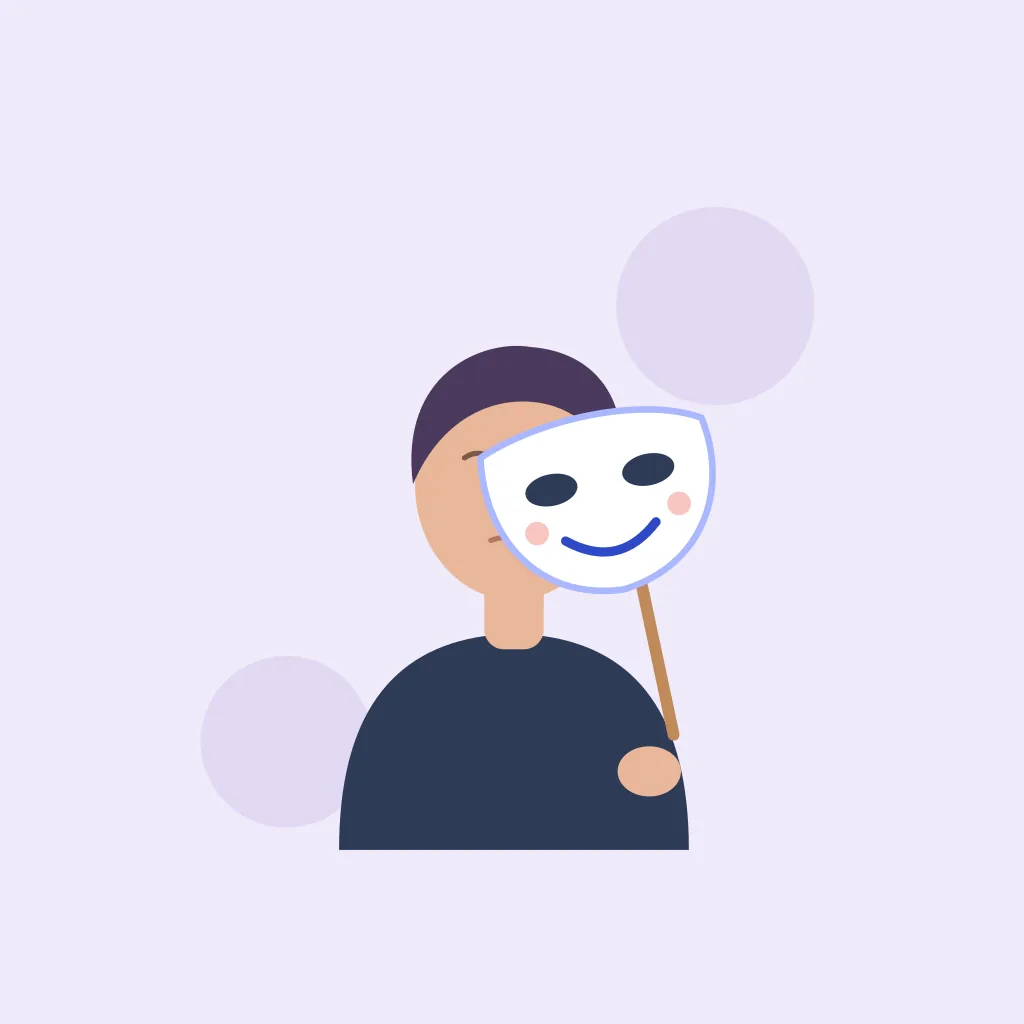
Many autistic people describe spending a lot of energy appearing “normal”: they copy others, rehearse conversations and hide what feels natural to them. This is called masking or camouflaging. It can make autism hard to see from the outside, both for others and sometimes for the person themselves. In this article, we explain what masking is, why people do it, what it costs, and how the CAT-Q questionnaire measures it.
What is masking?
Masking means hiding autistic traits or using strategies to fit in socially. Researchers often use the word camouflaging, which covers three things:
- Masking: hiding traits and showing a more socially accepted version of yourself, for example by forcing eye contact, controlling your facial expressions or holding back repetitive movements.
- Compensation: using learned strategies to make up for social difficulties, for example scripts for small talk, rules learned from films and books, or analysing conversations afterwards.
- Assimilation: trying to blend in with others, often by putting on an act, even when it feels unnatural.
Masking can be conscious or so automatic that the person hardly notices it. Many people start in childhood, after learning that their natural way of being leads to teasing, bullying or being told off.
Why do people mask?
In studies, autistic adults describe a number of reasons: to make friends and keep them, to manage at school and work, to avoid being bullied or excluded, and to avoid standing out. Many say they mask to stay safe. Masking can work in the short term, and it's an understandable response to a world that isn't made for autistic people.
What does masking cost?
Masking takes a lot of energy. Many people describe being completely exhausted after social situations that look effortless from the outside. Research has linked a lot of camouflaging with:
- exhaustion and what many autistic people call autistic burnout
- anxiety and depression
- feeling that nobody knows who you really are, or losing touch with yourself
- getting a diagnosis late, or being misdiagnosed
The last point is important. Because masking hides traits, many people, especially women, are first assessed for other things, such as anxiety, depression or eating disorders. Some are only recognised as autistic as adults, often after years of feeling different without knowing why. Read more in our article on autism in women and girls.
How the CAT-Q measures masking
The Camouflaging Autistic Traits Questionnaire (CAT-Q) was developed by Laura Hull, William Mandy and colleagues and published in 2019. It is based on interviews in which autistic adults described their own camouflaging. It has 25 statements, such as “I developed a script to follow in social situations” and “I monitor my body language or facial expressions to make myself look relaxed”.
You answer on a scale from 1 (“strongly disagree”) to 7 (“strongly agree”). Five statements are scored in reverse. The total is between 25 and 175, and you also get a score for each of the three areas: compensation, masking and assimilation.
How to read your CAT-Q result
There is no official cut-off for the CAT-Q. A higher score simply means more camouflaging. In the original study, autistic adults reported more camouflaging than non-autistic adults on average, but the groups overlapped. On test-autism.com, we use these ranges as a rough guide:
- 25–79: very unlikely to camouflage autistic traits
- 80–99: unlikely to camouflage autistic traits
- 100–119: likely to camouflage autistic traits
- 120 and above: very likely to camouflage autistic traits
The CAT-Q doesn't say whether you are autistic. Many non-autistic people also adapt to fit in, for example people with social anxiety. The result is most useful together with a questionnaire that measures autistic traits, such as the AQ-50 or the RAADS-R. If you get a moderate score on those but a high score on the CAT-Q, it may be a sign that your traits are hidden, and that a screening questionnaire underestimates them.
If you recognise yourself
Realising that you mask can be a relief, but also overwhelming. Some things many people find helpful:
- Notice when you mask and how you feel afterwards. Which situations drain you the most?
- Plan time to recover after demanding social situations.
- Find places where you can unmask, with people you feel safe with, or in communities of autistic people.
- Talk to a professional if you are exhausted, anxious or depressed, or if you want to be assessed for autism. Tell them that you mask, since it can affect how you come across. Read our guide on how to get an autism assessment as an adult.
Curious about how much you camouflage? Take the CAT-Q for free here.